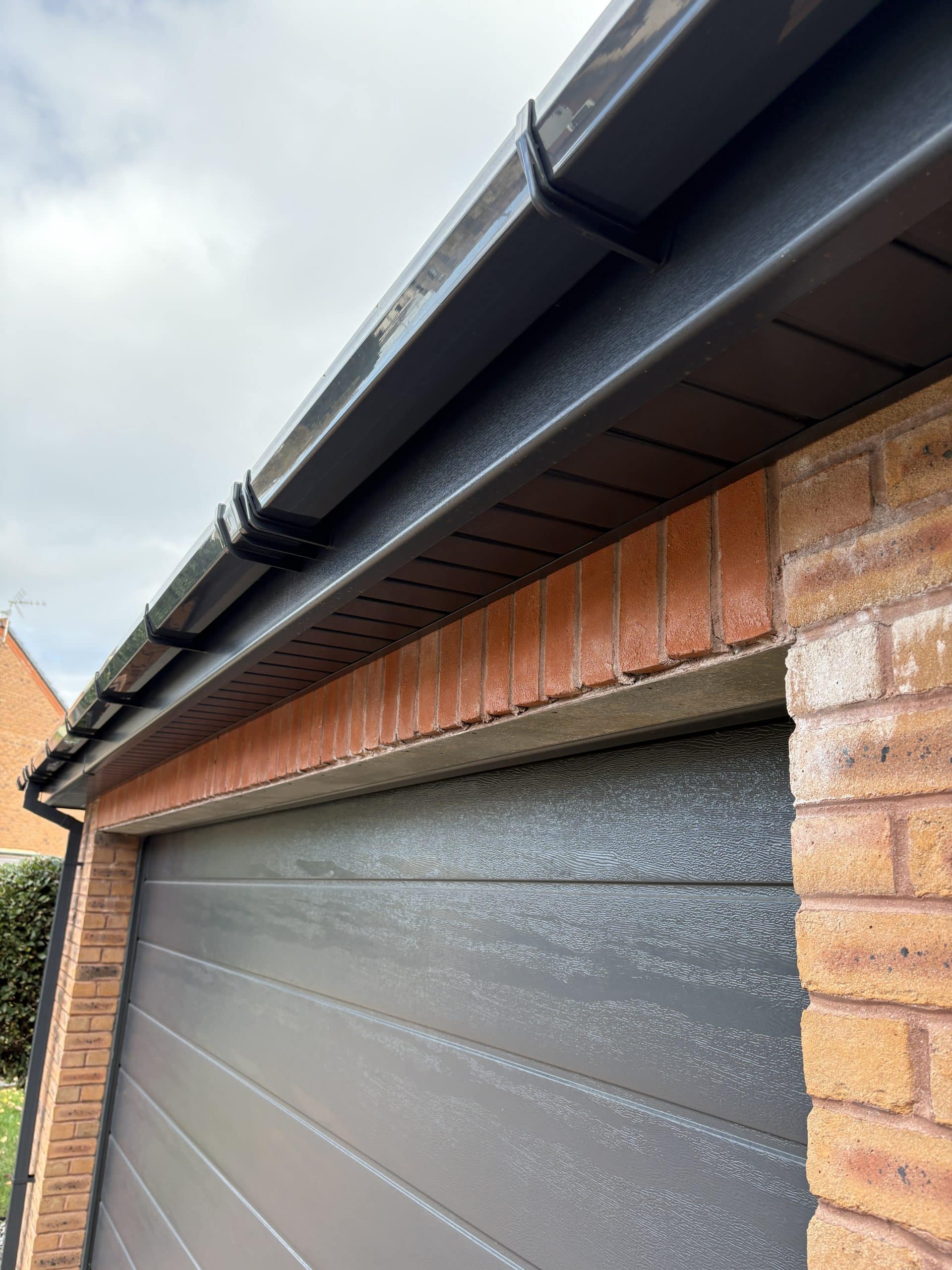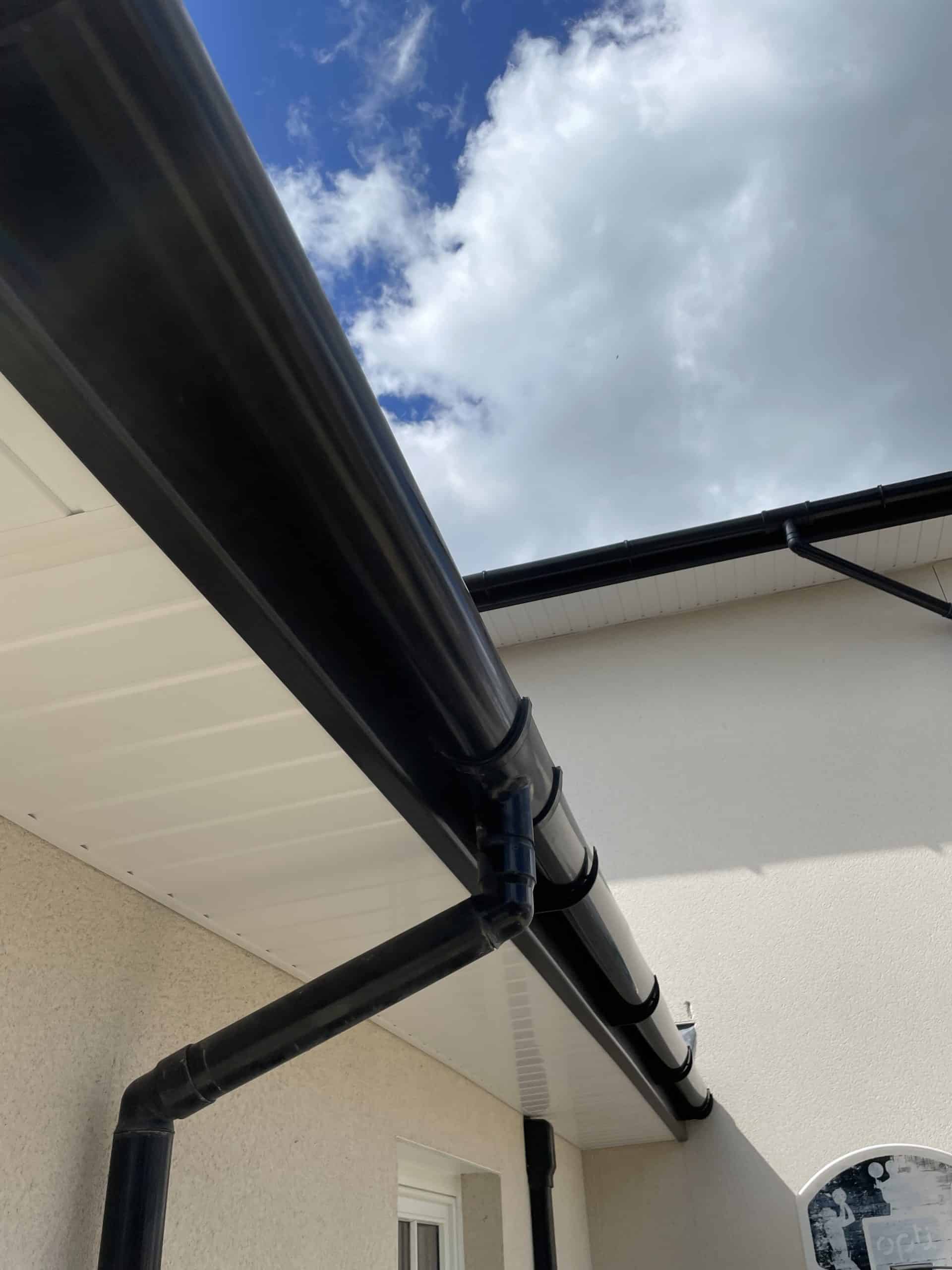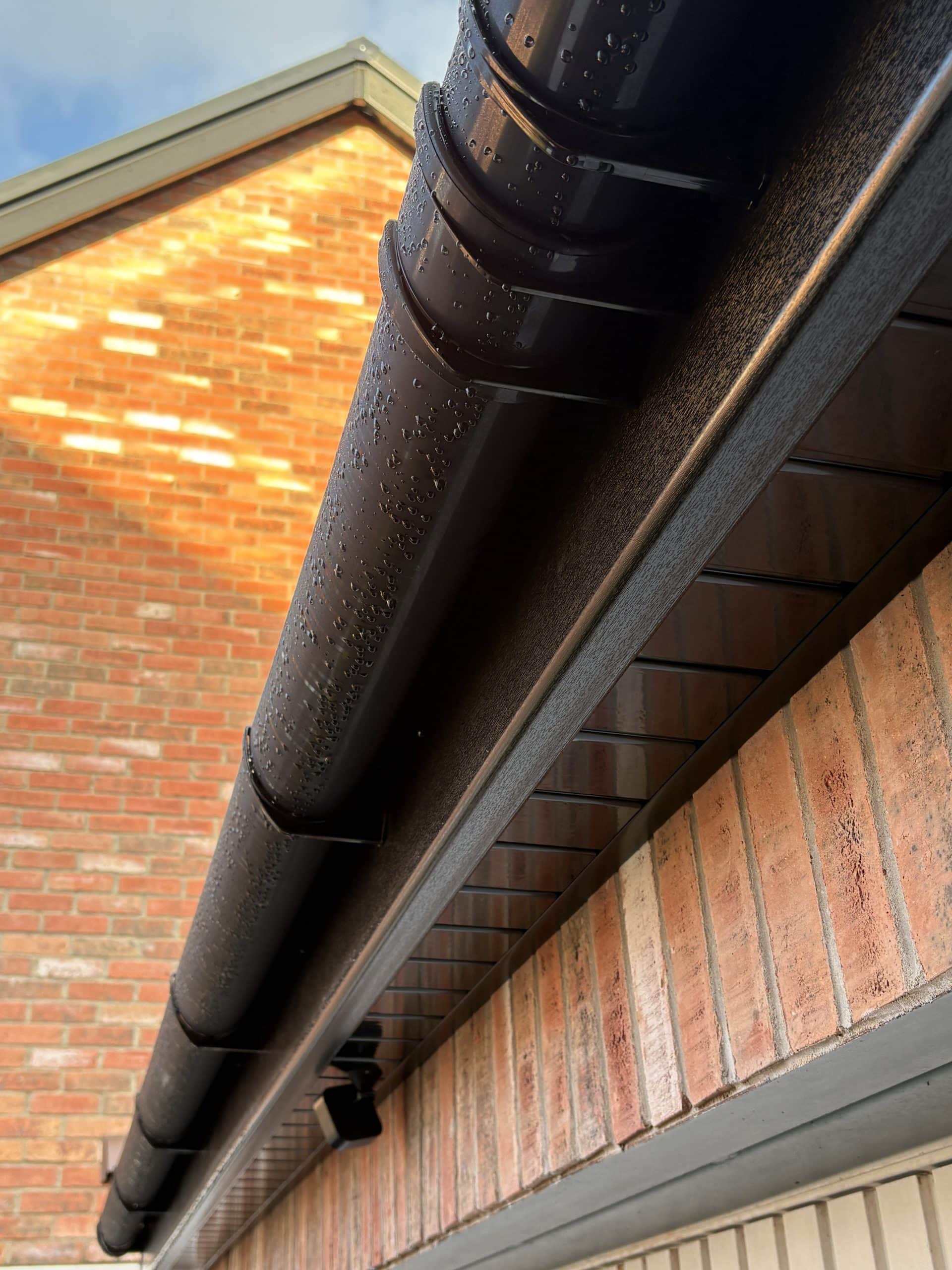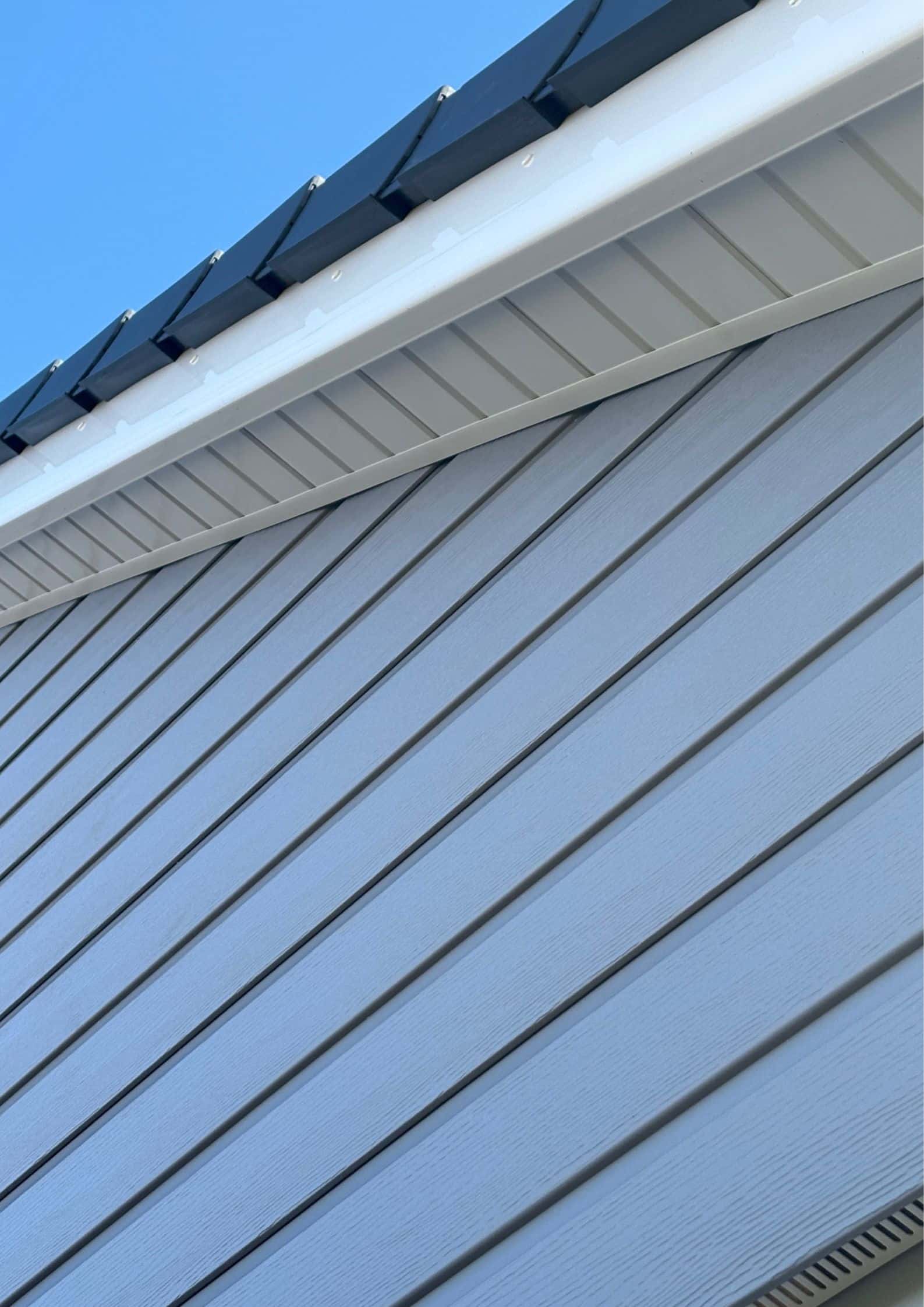
Guttering 101: The Different Parts of a Guttering System Explained
If you own a home in South Wales, you’re probably all too familiar with the amount of rain your guttering system has to handle year-round. From heavy rain rolling in off the Bristol Channel to the constant drizzle across the Valleys and wind-driven downpours in areas like Pontypridd, Newport, and Bridgend, properly functioning gutters aren’t optional — they’re essential.
But most homeowners don’t actually understand the different parts of a guttering system. They know when something isn’t working properly, but not necessarily why.
This guide covers:
- Why South Wales homes are prone to rainwater damage
- How a full gutter system works, from roof to drain
- The key parts, materials, and profiles that perform best in the Welsh climate
- When gutter guards help, and the warning signs your system is starting to fail
Why Your Rain Gutter System Matters More in South Wales
South Wales is one of the wettest parts of the UK, with Cardiff receiving around 1,150mm of rainfall annually, and upland areas getting even more. This heavy rain puts significant pressure on your guttering system.
A properly functioning gutter system collects rainwater from the roof and directs it safely away from your home, preventing:
- Water damage to exterior walls, causing stains, erosion, and damp penetration
- Foundation damage from pooling water is weakening stability
- Rotting timber in fascia boards, roof timbers, and window frames
- Internal damp and mould due to water seepage
- Damage to landscaping, pathways, and ground surfaces
- Damage to siding and soffits from blocked or broken gutters
These issues are common, especially in older South Wales homes, and can be costly to repair. Maintaining a well-installed gutter system protects your home and saves you money in the long run.
How Rainwater Moves Through a Gutter System
Before we get into the individual parts of a gutter system, let’s take a look at the entire process, from the moment rainwater hits your roof to the moment it exits the drainage system.
Here’s how it works, step by step:
- Rain lands on the roof — water hits the tiles or slats and starts running downward, towards the lower edge of the roof (the eaves)
- Water reaches the edge of the roof — after running off the roof shingles or tiles at the eaves, it falls or flows into the guttering/eavestrough below
- The trough carries water along its length — the gutter is installed at a slight fall so that water flows under gravity towards the outlet point
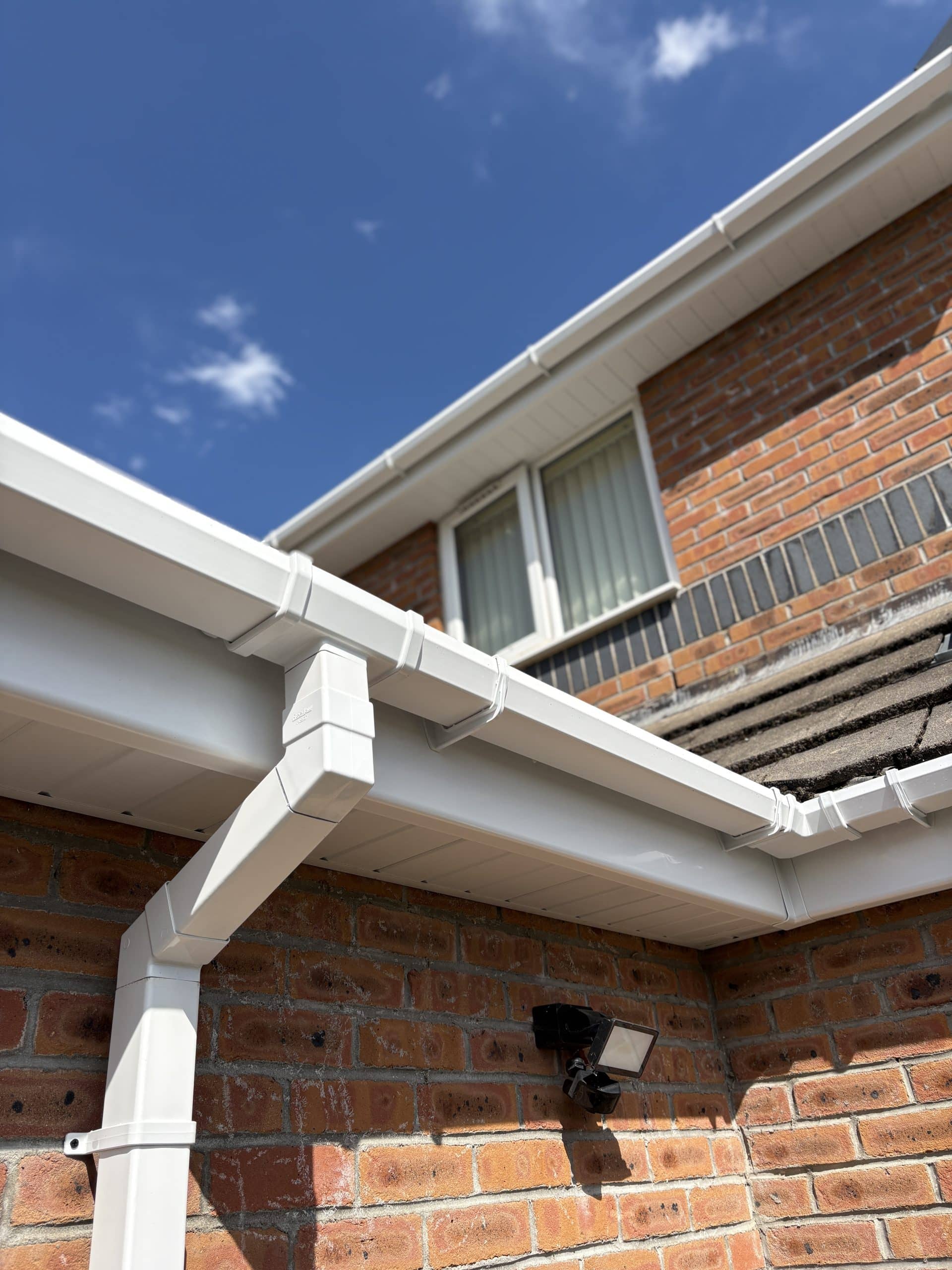
- Water reaches the drop outlet — this is the point in the gutter where the water exits the gutter and drops down into the vertical pipework
- Water enters the downpipe — the downpipe (also called a downspout) carries all the water vertically down the side of your home
- Elbows redirect the flow — If the downpipe needs to change direction, there are two main elbow styles. A-style elbows offset the pipe outward from the wall, while B-style elbows allow left or right direction changes.
- Water exits at ground level — the downpipe connects to a shoe or offset at the base and directs water into a drain, soakaway, or water butt
Every single part in this process needs to be in top condition for the entire system to work properly. If one component fails, the entire flow is compromised.
The Main Gutter System Components Every Homeowner Should Know
Now let’s take a look at the main components of a guttering system, what each one does, and why they matter.
1. Gutter Trough
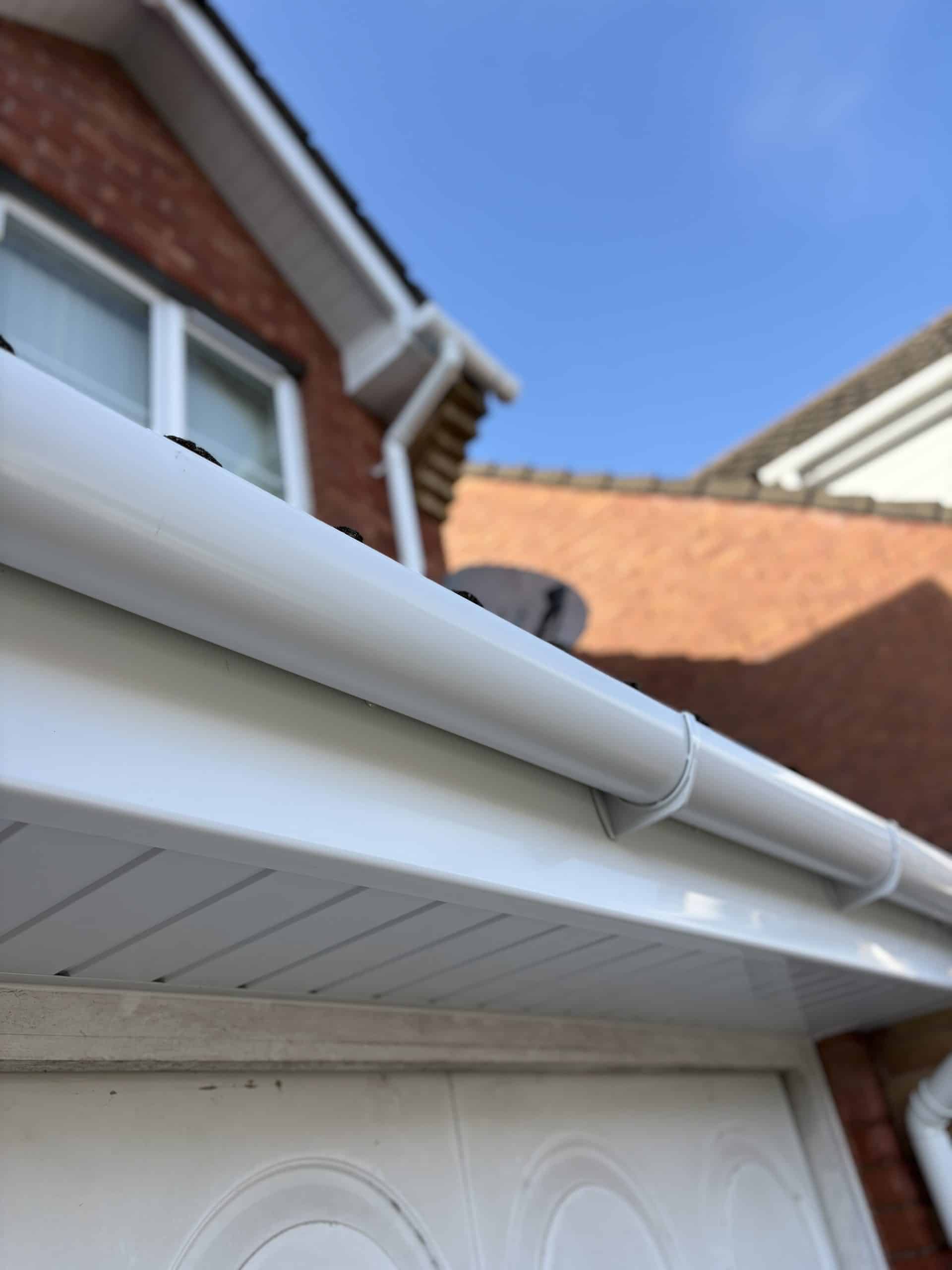
The gutter trough is the main horizontal channel along the edge of your roof that collects rainwater as it runs off the roof.
- Collects all rainwater from the roof surface
- Needs to be a suitable material and profile for the Welsh climate
- Must be installed with a fall (around 1:600) toward the outlet, as an incorrect fall will cause standing water, debris build-up, and overflow
- Joined together using gutter unions on longer runs
2. Drop Outlet (Running Outlet)
The drop outlet connects the horizontal gutter to the vertical downpipe and controls where water leaves the system. This job usually gets overlooked, but it’s important to get it right.
- Allows the water to drain from the gutter into the downpipe
- Can be placed at the end, middle, or several points along the run
- Must be positioned at the lowest point of fall in the gutter system
- If not placed correctly, water starts to pool and overflow
3. End Caps (Stop Ends)
End caps, also known as external stop ends, seal the ends of gutter runs to stop water from seeping out where the system finishes.
- Seals off the open ends of gutter sections
- Must be fully seated and watertight
- Stops water from leaking out of the gutter ends
- Common point of failure if missing or poorly fitted
4. Gutter Unions
Unions are used to join two lengths of gutter together to allow water to flow smoothly without leaks.
- Keeps separate gutter sections tightly connected
- Seal the joints with rubber seals or gaskets to stop any water from leaking
- Will need to reseal the joints as the seals wear out over time
- Usually used every 4 metres on standard gutter runs
5. Angle / Corner Pieces
Angle pieces are used to change the direction of your gutter run, usually used at building corners.
- Used for fitting both inside and outside corners
- Pieces come in 90° and 135° variants
- Sealed with the same rubber gaskets as unions
- Can fail over time and start leaking at the joints
6. Gutter Brackets
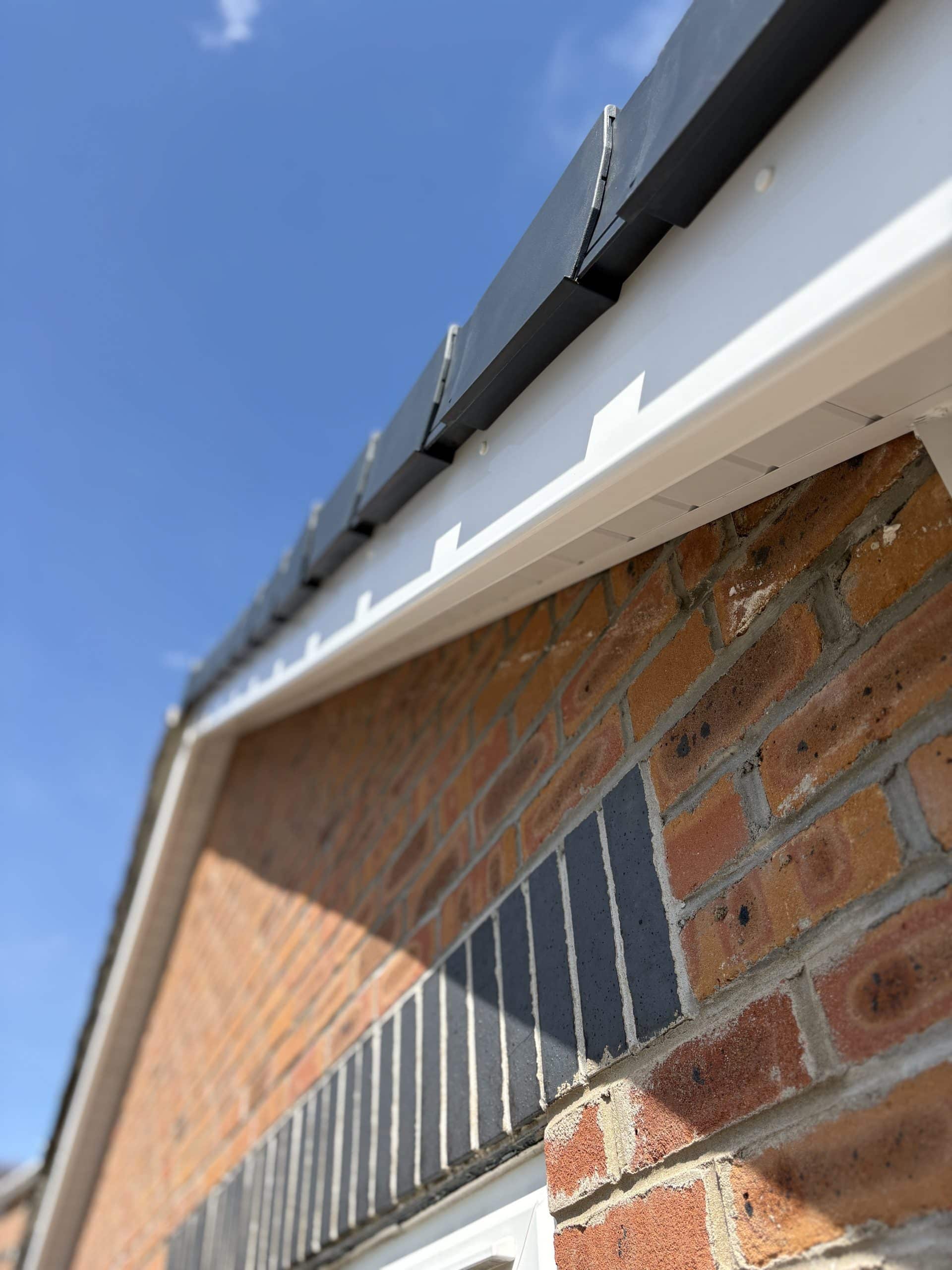
Gutter brackets are the pieces that hold the gutters in place to the fascia board, making sure it stays properly aligned.
- Has to support the weight of water, leaves, and ice in the gutter
- Keeps the gutter in the correct fall towards the outlet
- Should be spaced at a maximum of 800 mm apart on uPVC systems to ensure a solid fixing.
- Poor fixing or rotten fascia will cause the entire system to fail
7. Fascia Board
Technically, the fascia board isn’t a part of the gutter system, but since the gutter brackets attach to it, the fascia’s condition and material are important when fitting new gutters or checking for problems.
- Supports the gutter brackets
- Runs along the roof edge beneath the tiles
- The timber must be solid to ensure a secure installation
- Rotting fascia will lead to the entire gutter system coming loose
8. Downpipe
The downpipe is what carries water vertically from the gutter system down to the ground-level drainage.
- Transfers water from the outlet to the ground drainage
- Domestic size is usually 68mm in South Wales
- Secured to walls with pipe brackets
- Blockages or cracks can cause water overflow and dampness in the walls
9. Pipe Brackets
Pipe brackets are the pieces that hold the downpipe securely to the external wall and keep it stable under heavy water flow.
- Keep the downpipe firmly in place against the wall
- They are usually spaced about 1.8 metres apart
- Brackets need to be fixed into solid masonry
- If they fail to do their job properly, the downpipe will come loose and start leaking
10. The Downpipe Shoe
The shoe is the final outlet piece that directs water safely away from the building at ground level.
- Directs the water safely away from the foundations and into the drainage
- Helps stop water from pooling at the base of the wall
- Can be connected to drains, soakaways, or water butts
- Blockages here can cause localised flooding and damp issues
The Importance of Fascia and Soffits in a Guttering System
The fascia board and soffits aren’t technically part of the guttering system, but without them, the entire gutter system would collapse.
Fascia Board:
- Runs horizontally along the eaves, just behind the guttering
- Provides the surface for the gutter brackets to be fixed to
- Protects the ends of the roof rafters from the elements
- Acts as the first line of defence against water getting into the roof space
Soffit Boards:
- Runs horizontally underneath the eaves, between the fascia and the wall
- Keeps the eaves space under the roof out of the elements
- Helps keep a steady level of ventilation in the roof void to prevent condensation from building up
- Protects the underside of the roof structure from rain and wind-driven moisture
Why Both Matter for the Guttering System
If the fascia board starts to rot or pull away from the rafters:
- Gutter brackets lose their secure fixing and can pull free under heavy load
- The gutter system may sag and separate
- Water can run behind the gutter instead of into it
- Roof timbers risk damage from water exposure
A common issue in South Wales is failing fascia or soffits, causing gutter problems. Fixing gutters won’t help if the fascia is compromised.
Modern uPVC fascia and soffit systems prevent rot, don’t absorb moisture, require no repainting, and provide a solid fixing point for gutter brackets.
Common Materials Used in Gutter Systems
The type of material your guttering is made from greatly affects its appearance, durability, maintenance needs, and ability to withstand the Welsh weather.
uPVC (Unplasticised Polyvinyl Chloride)
uPVC is the most popular choice for South Wales homes due to its cost-effectiveness and low maintenance.
- Lightweight and rust-resistant
- Available in many colours, including wood-effect finishes
- Lasts 25-40 years when installed properly
- All fittings, like gutter hangers, gutter clips, and outlets, come in uPVC
Cast Iron
Common in older and period properties, cast iron offers strength and longevity.
- Extremely durable, lasting over 100 years with maintenance
- Heavy, requiring strong fascia brackets and structural integrity
- Prone to rust if paintwork fails
- Repairs and replacement can be costly and require specialist labour
Aluminium
A modern, rust-resistant option ideal for coastal and high-performance needs.
- Lightweight and impact-resistant
- Powder-coated in various colours
- Joints sealed for leak protection
- Suitable for areas prone to salty sea air
Vinyl Gutters (US Term)
Often used interchangeably with uPVC in the UK, but technically different.
- Plastic guttering systems
- Cheaper versions may be less durable than standard uPVC
Steel (Galvanised or Coated)
Primarily for commercial or industrial use rather than residential.
- Strong and heavy-duty
- Requires an intact coating to prevent rust
- Rarely used on typical South Wales homes
Choosing the right material and ensuring proper installation with secure fascia brackets and pipe cleats supports the guttering system’s structural integrity and protects your home’s foundation from water damage.
Different Gutter Systems, Profiles, & Styles
You can’t simply replace one gutter profile with another, as each suits different houses, roofs, and rainfall levels.
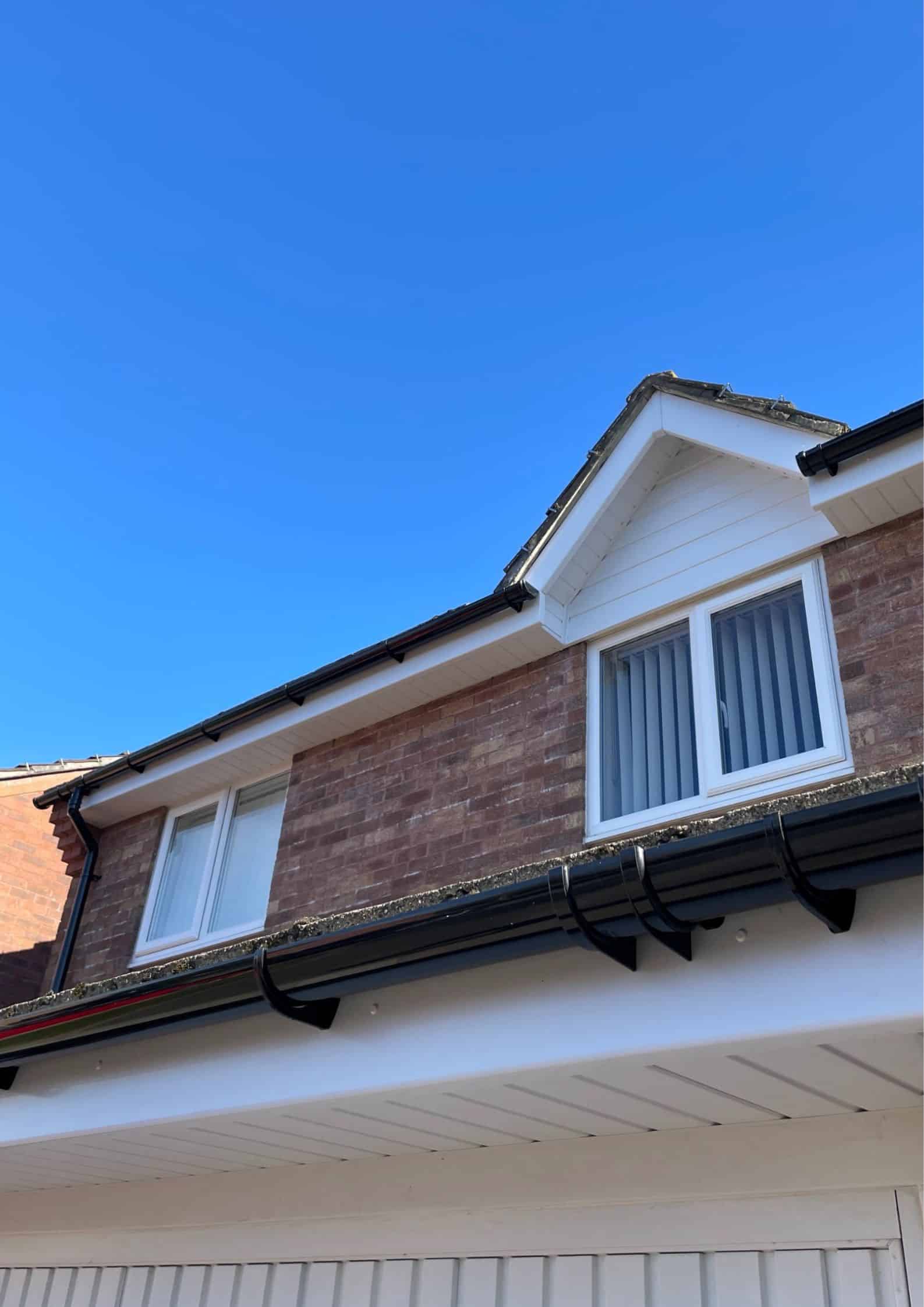
Half Round Gutter
The most popular profile for South Wales homes is appreciated for its simplicity and versatility.
- Handles normal rainfall effectively
- Traditional style suits most house types
- Standard UK size: 112mm
- Common for terraces and semi-detached homes
Ogee (K-Style Equivalent)
A decorative profile favoured for period properties where appearance and capacity matter.
- Decorative front ideal for Victorian and Edwardian homes
- Available in standard and deep-flow for increased capacity
- Combines traditional look with modern uPVC durability
Square/Rectangular Profile
A modern, minimalist style suited for new builds and extensions.
- Clean lines that complement contemporary architecture
- Larger profiles handle higher rainfall volumes
- Available in various colours to match finishes
Deep Flow/High Capacity Systems
Designed for larger roofs and heavy rainfall areas like the South Wales uplands.
- Deeper and wider to manage more water
- Ideal for bungalows and exposed locations
- Requires larger downpipes and fittings
Which profile is right for your South Wales home?
The best profile depends on your property type, roof size, and style.
Common choices include:
- 112mm half-round uPVC for standard terraces and semi-detached homes in Cardiff, Newport, and the Valleys
- Higher-capacity 115mm ogee or deep flow profiles for larger or complex roofs
- Ogee uPVC or cast iron for period properties with traditional aesthetics
- Square or rectangular uPVC systems with anthracite or black finishes for new builds and modern extensions
Why Proper Installation Matters
Even the best-quality guttering components won’t last if not installed correctly, especially in rainy South Wales, where heavy rain strains the system.
Key Installation Requirements:
- Fall (Gradient): Set gutters to a consistent fall (about 1:600) so water flows smoothly to outlets; a wrong fall causes standing water and blockages.
- Bracket Spacing: Space brackets roughly 800mm apart; too far causes sagging, too few reduces stability.
- Secure Fixing: Fix brackets through fascia into solid timber or backing batten to prevent pull-out, especially if the fascia is soft.
- Proper Joint Setup: Ensure unions, angles, and outlets are aligned and seated to avoid leaks.
- Downpipe Support: Space pipe clips properly and fix at socket joints to prevent movement and separation.
- Correct Outlet Positioning: Place outlets at the lowest fall point so gutters drain properly and avoid overflow.
Common Installation Mistakes
When these details are missed, problems appear quickly:
- Sagging gutters hold standing water, increasing blockages and joint failure
- Brackets pull out of weakened fascia boards, causing gutter sections to come loose
- Leaking joints drip from day one, staining external walls
- Downpipes separate at joints, releasing water at height
In South Wales, poor installation not only affects appearance but also leads to water damage to walls, foundations, and roofline timbers due to heavy rain.
Gutter Guards: Are They Worth It?
Gutter guards are covers or mesh fitted over gutters to keep leaves and debris out of the system. They’re most often used on houses with trees overhanging the roof, where blocked gutters become a regular issue throughout autumn and winter.
| Pros | Cons |
| Help keep the gutter clean for longer | No system keeps a gutter completely free from debris build-up |
| Reduce the chances of blocked outlets and overflowing gutters | Fine debris, moss spores, and silt still build up over time, even with a guard |
| Reduce damp debris sitting in the trough, which can speed up wear on the joints and seals | Some guard designs trap debris on top rather than letting it clear naturally |
| Especially useful for houses surrounded by trees | Mesh guards can restrict the flow during very heavy rainfall |
| Can reduce the moss growth in some cases | Foam inserts can compress and reduce the flow in the gutter itself |
Gutter guards don’t eliminate maintenance, but can reduce it. In South Wales, with many trees nearby, mesh guards can cut cleaning from twice yearly to once, without affecting water run off during normal rain.
They are especially helpful for:
- Properties with difficult roof access
- Areas with heavy leaf fall
- Homeowners wanting minimal upkeep
For homes in open spaces with few trees, the benefits are minor.
Common Signs Your Guttering System Is Failing
Most gutter problems show early warning signs before any serious damage. Spotting those signs early can save you a lot of money and hassle down the line.
Warning Signs from the Ground
Some of the most common warning signs to look out for from the ground include:
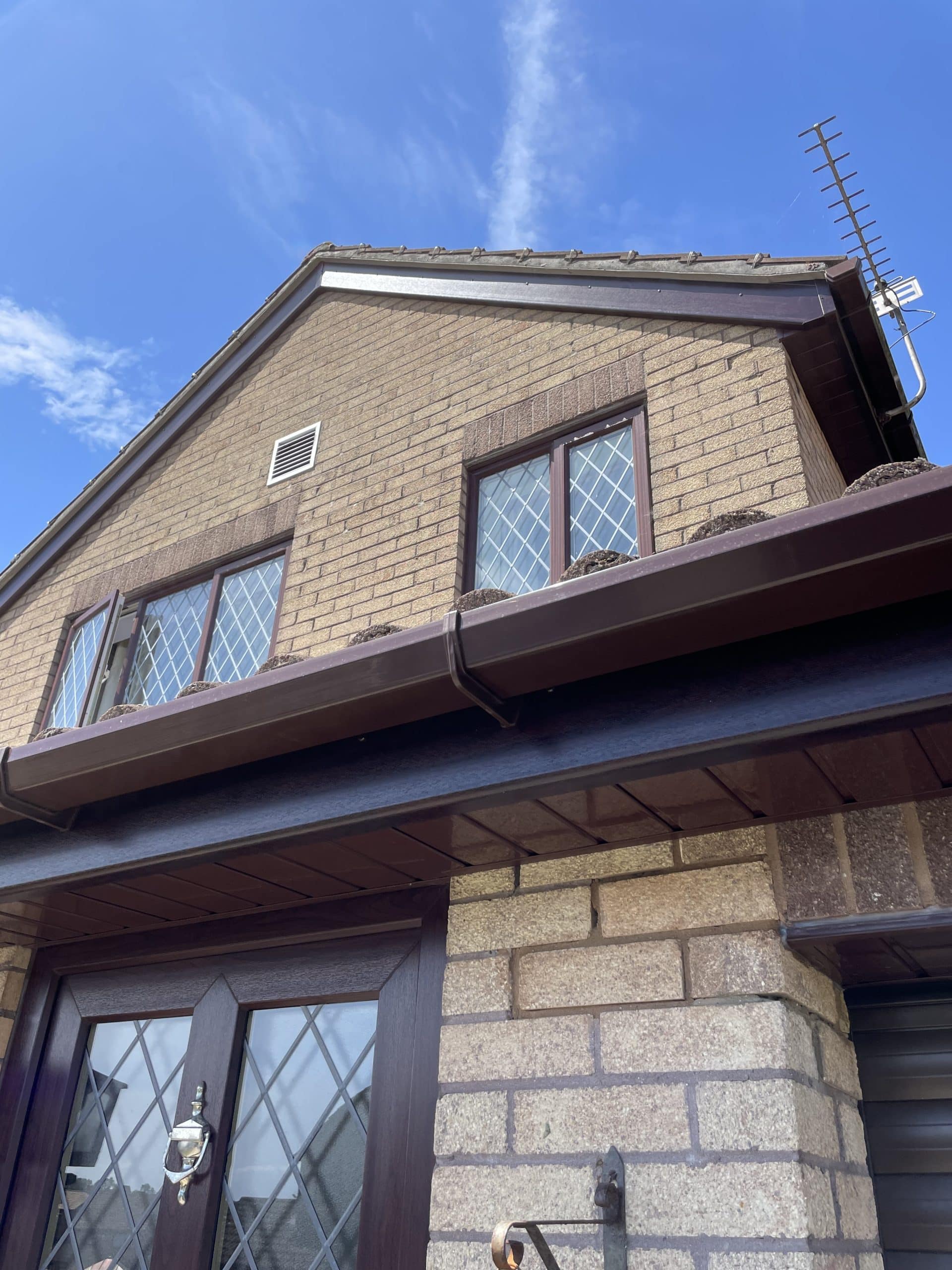
- Gutters are starting to pull away from the fascia or are slowly sagging between their brackets
- Rain pouring out of the gutters, or dripping from the joints and end caps
- Staining, algae, moss or rust marks beneath the guttering
These signs usually mean the gutters are blocked, the brackets are failing, the seals are worn, or there’s a leak somewhere in the system.
Warning Signs Up Close
If you take a closer look, you might spot:
- Cracks in the gutter or the end caps
- Brackets coming loose or blocked outlets
- The fascia boards behind the gutters are slowly rotting
These issues tend to build up over time, and eventually, the gutters will no longer be able to take any more weight and start to lose their structural support.
Warning Signs Around the Property
Signs to look out for around the base of your property include:
- Damp patches on the outside walls that don’t go away
- Water pooling nearby
- Erosion below the downpipes
- Internal damp in more severe cases
This usually means the rainwater isn’t being carried away from the building like it’s supposed to, and it’s starting to affect the surrounding structure.
Final Thoughts on Gutter Components and Long-Term Protection
A complete gutter system includes many components beyond just the trough. Each part—gutters, brackets, unions, end caps, outlets, downpipes, pipe cleats, elbows, and shoes—must be correctly placed and maintained for the system to function properly.
In rainy South Wales, understanding these parts helps you identify issues early and save money.
Key points:
- All parts depend on each other; a failed bracket, blocked outlet, or cracked downpipe compromises the system.
- Fascia board condition is crucial since gutters are only as secure as their fixing surface.
- Material and profile choices must suit your property and South Wales’ climate.
- Proper installation and regular maintenance ensure long-term performance.
If your gutters show warning signs or your home is over 20-25 years old without inspection, a professional assessment is recommended. Often, replacing the entire system on typical semi-detached homes is more cost-effective than repeated repairs.
Unsure about your gutter condition? Book a professional inspection today to protect your property.