Do You Need Planning Permission to Replace Fascias, Soffits and Guttering?
When homeowners consider replacing their roofline, one question comes up more than any other:
“Do I need planning permission or Building Regulations approval to replace my fascias, soffits or guttering?”
It’s a sensible concern. Roofline components sit on the boundary between routine maintenance and visible exterior alteration, so it’s not always obvious where the rules apply.
In most cases, replacing fascias, soffits and guttering is straightforward and does not require formal approval—but there are important exceptions and technical details that every homeowner should understand before work begins.
This guide explains when permission is usually not required, when you should check first, and what matters most during a proper uPVC roofline replacement.
Planning permission: what normally applies?
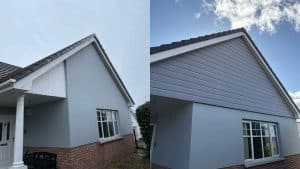
For the vast majority of standard houses, replacing existing fascias and soffits is classed as maintenance, not development. This means planning permission is not normally required, even when upgrading from timber to uPVC.
Some changes to properties may not require planning permission and fall under permitted development rights, but this varies by location and type of work.
This applies where:
- Existing boards are removed and replaced like-for-like
- The overall appearance of the roof edge remains similar
- The work does not significantly alter the character of the building
Simply upgrading old, weathered timber to modern uPVC fascias and soffits is usually treated the same way as replacing windows or repairing a roof covering.
Situations where you should check first
Although most roofline replacements fall under permitted maintenance, there are circumstances where permission or consent may be required.
Listed buildings
If your property is listed, external changes are much more tightly controlled. Even small alterations—such as changing materials or profiles—can require listed building consent.
Listed buildings require special consideration, and any work affecting them typically requires Listed Building Consent in addition to planning permission.
Always check before carrying out any roofline work on a listed home.
Conservation areas and designated locations
Properties in designated areas, such as Conservation Areas, may have more restricted permitted development rights and often require planning permission for work that would not otherwise need it.
If your home is in a conservation area, Area of Outstanding Natural Beauty, National Park, or other designated zone, additional restrictions may apply. Local authorities may want to preserve the appearance of buildings visible from the street, particularly on front elevations.
Significant visual changes
You should also check if the work will noticeably change the building’s appearance, for example:
- Switching to a very different fascia profile
- Changing colours dramatically on a prominent elevation
- Altering bargeboards or roof overhang details
If the finished look will be clearly different from the original, a quick check with your local planning authority can avoid future issues.
How Do I Apply for Planning Permission?
Applying for planning permission involves several important steps to ensure your project complies with local regulations and can proceed smoothly. Here’s a detailed guide to help you navigate the process:
1. Contact Your Local Planning Authority (LPA)
The first step is to get in touch with your local planning authority, usually through your local council. They provide detailed information on whether your specific project requires planning permission or if it falls under permitted development rights. You can also seek advice on any special considerations, such as if your property is listed or located in a conservation area.
2. Prepare Your Application
Once you understand the requirements, prepare your planning application. This typically includes:
- Completed application forms are available via the local planning portal.
- Detailed plans and drawings showing the proposed changes.
- Supporting documents such as design and access statements or heritage impact assessments if applicable.
- Any additional information requested by the LPA to provide a comprehensive view of your project.
3. Submit Your Application Through the Planning Portal
Most planning authorities use an online planning portal for submissions. Creating an account on the portal allows you to submit your application, upload documents, and pay any applicable fees securely. The portal also lets you track the progress of your application and receive updates.
4. Public Consultation and Notifications
After submission, your application will undergo a public consultation period, typically lasting between three and eight weeks. During this time, neighbours and other interested parties can view your plans and submit comments or objections. The LPA will notify relevant parties and consider their feedback as part of the decision-making process.
5. Application Review and Decision
The LPA reviews your application against local planning policies and national regulations. They assess the impact on the surrounding area, including considerations like design, environmental effects, and neighbour amenity. You may be asked to provide additional information or amend your plans if concerns arise.
The decision will be communicated through the planning portal or directly by the LPA, usually within eight weeks for straightforward applications. More complex projects might take longer.
6. If Approved, Begin Work Within the Specified Period
Planning permission typically lasts for three years from the date of approval. You must begin building work within this period, or the permission may lapse.
Obtaining a Lawful Development Certificate (LDC) provides permanent legal proof that a project is compliant with Permitted Development rights.
7. If Refused, Consider Your Options
If your application is refused, you can appeal the decision or revise your plans and resubmit. The refusal notice will provide reasons for the decision, helping you understand what changes might be needed.
Additional Tips
- Always review detailed information and guidance available on your local council’s website and the national planning portal.
- Seek professional advice if your project involves listed buildings, conservation areas, or complex developments.
- Keep records of all communications, submissions, and decisions for your reference.
By following these steps and maintaining good communication with your local planning authority, you can navigate the planning system effectively and increase the likelihood of a successful application.
Building Regulations: what homeowners need to know
A common misconception is that roofline replacement automatically requires Building Regulations approval. In most cases, it does not.
Replacing fascia’s and soffits alone normally falls outside Building Regulations control.
However, there is one critical condition:
Roof ventilation must not be reduced
Even where no approval is required, replacement work must not reduce existing roof ventilation. Poor ventilation can lead to condensation in the roof space, which in turn can cause damp, mould, and timber decay over time.
This is one of the most important technical aspects of roofline replacement—and one of the most frequently overlooked.
Why ventilation matters during roofline replacement
Modern roof spaces rely on controlled airflow to manage moisture. When fascias and soffits are replaced, ventilation is usually provided through one or more of the following:
- Vented soffit boards
- Over-fascia vents at the eaves
- Maintaining existing ventilation paths
Problems occur when installers:
- Cap over old boards without checking what’s behind them
- Replace vented soffits with solid boards
- Block airflow with insulation or poorly fitted trims
The result may not be visible immediately, but months or years later homeowners can face condensation, damp insulation, or even rot within the roof structure.
A competent installer should always assess ventilation before work begins and explain how it will be maintained or improved.
What about guttering?
Guttering replacement is also usually treated as maintenance. Simply renewing old guttering with new uPVC systems does not normally require permission.
However, caution is needed if:
- Downpipe positions are being moved
- Rainwater discharge points are being altered
- The property is listed or in a protected area
Gutters must also be correctly positioned relative to the roof edge. Poor alignment can cause rainwater to overshoot the gutter, particularly during heavy rainfall—leading to damp walls and damage over time.
The biggest mistake homeowners make
The most common problem seen after roofline work is covering over old timber instead of removing it.
While capping over existing boards may look tidy initially, it can:
- Trap moisture behind the new boards
- Hide existing rot or decay
- Prevent proper inspection of the roof edge
- Reduce ventilation if not designed correctly
Over time, this can lead to sagging gutters, staining, or hidden structural issues—often resulting in the homeowner paying twice to have the job corrected properly.
A quality installation should always involve checking the condition of the underlying timber and replacing any sections that are unsound.
A simple checklist before work starts
Before approving any roofline replacement or begin work, homeowners should be able to answer the following:
1. Is my property listed or in a conservation area?
If yes, confirm requirements with the local council authority and gain the necessary guidance. .
2. Will the finished appearance be significantly different?
If so, it’s sensible to check before work begins.
3. How will roof ventilation be maintained?
Ask exactly what vents will be installed and where.
4. Will old timber be removed and inspected?
Hidden decay should be addressed, not concealed.
5. How will gutter alignment and water flow be set?
Gutters should sit correctly under the roof edge to catch rainwater effectively.
Frequently asked questions
Do I need planning permission to change timber fascias to uPVC?
In most cases, no. It is usually classed as maintenance, provided the appearance is not significantly altered and the property is not listed or in a protected area.
Do I need Building Regulations approval for soffits and fascias?
Normally no, but ventilation must not be reduced. This is critical to long-term roof health.
How long does roofline replacement usually take?
Most typical homes can be completed within one to three days, depending on size, access, and the condition of existing timber.
What causes problems after roofline replacement?
The most common causes are poor ventilation, covering over rotten timber, and incorrectly positioned gutters.
Final thoughts
Replacing fascias, soffits and guttering is one of the most effective ways to protect a home from water ingress and reduce ongoing maintenance. For most properties, it is a straightforward upgrade that does not require formal permission.
However, the details matter. What permitted developments are allowed? Understanding when to check regulations, how to start planning applications, ensuring proper ventilation, and insisting on correct installation practices can make the difference between a long-lasting improvement and an expensive problem down the line.
Taking the time to get it done properly protects not just the roofline—but the structure of the home itself.